
From the 30-share pack, 24 companies fell, with Yes Bank emerging as the top loser, dropping 8.36 per cent, followed by NTPC, M&M and Vedanta.

'The recent price hike would only be beneficial if the airlines continue to operate at 80 per cent airline capacity. An increase towards 90 or 100 per cent airline capacity would again add pressure to the fares as demand remains muted. Also, we are in the fourth quarter of the fiscal year which is a seasonally weaker quarter,' says an analyst.

It's raining IPOs, with eight issues hitting the market in a span of six days. However, the pace of new filings points to a deluge during the latter part of the year. So far this year, 58 companies have filed their draft red herring prospectus (DRHP) with the market regulator for initial public offerings (IPOs), exceeding the combined tally of 50 in the last two years. Industry participants said the filing count could cross 100 this year, setting a new benchmark in terms of amount mobilised in a calendar year.
A total of 49 companies raised Rs 81,615 crore in Samvat 2077, more than the preceding four years and almost double the amount raised in the previous year. Samvat 2078 appears even more promising with mega issues of Paytm and Life Insurance Corporation (LIC) of India. However, Paytm's record could be short-lived as state-owned LIC is planning to launch a Rs 1-trillion IPO by March 2022.

The Sensex was mainly dragged by Tata Motors, ICICI Bank, Bharti Airtel and Reliance Industries -- shedding as much as 4.60 per cent.

From the BSE 30-share blue chip pack, 27 scrips ended with losses led by SBI and Tata Steel.

Bucking the overall downtrend, shares of RIL rallied nearly 10 per cent, capping the Sensex loss to a large extent.

Analysts expect Colgate's overall volume growth to remain in single digits (around 5-6 per cent) for the next two years.

While a coordinated aggressive monetary easing from the central banks is most likely to offer some respite in the near-term, it is unlikely to improve the sentiments.

The surge in IT, auto and FMCG stocks were led by investors seeking safety against market volatility.

Check out some of the stocks that will react on the basis of their numbers in the near term.

Investors became richer by over Rs 6.34 lakh crore on Monday as markets gave a big shout-out to the Budget 2021-22, which analysts termed as 'unprecedented' against the backdrop of the pandemic-induced slowdown. Cheering the Budget proposals, the BSE benchmark Sensex zoomed 2,314.84 points or 5 per cent to close at 48,600.61. During the day, it jumped 2,478.63 points to 48,764.40. This was the best Budget-day gain for the markets since 1997, analysts said. Following the extremely positive market sentiment, the market capitalisation of BSE-listed companies rallied Rs 6,34,069.67 crore to Rs 1,92,46,713.70 crore.

Yes Bank was the top loser in the Sensex pack, crashing 8.36 per cent, followed by NTPC, M&M, Vedanta, Sun Pharma and TCS, which lost up to 4.81 per cent lower.

Nearly 400 stocks hit their 52-week low on BSE on Thursday.

There was broad-based rally with participation across sectors creating enormous wealth for investors but starting 2018, the rally got concentrated into select large-cap companies with under performance in broader markets.

'Over the next two to three years, hiring will come down further.' 'You will see the industry intake of freshers go down to 150,000 from the current 200,000.'

A fourth of the property market is cash-based and this has affected home sales after high value notes were scrapped.

Short sellers may capitalise on the weak sentiment owing to the dispute between co-founders Rana Kapoor and Madhu Kapur.

Sensex heavyweight Reliance Industries fell 2.76 per cent. In percentage terms, major laggards were Yes Bank, Indusind Bank, RIL, ICICI Bank, HDFC and Axis Bank -- plunging as much as 6.62 per cent.

The Sensex posted its biggest single-day jump in over a decade at 1,921 points and investors' wealth soared by a staggering Rs 6.8 lakh crore after Finance Minister Nirmala Sitharaman delivered a surprise cut in corporate tax rates on Friday.

As India emerges from the COVID-19 crisis, the ninth budget under the Modi government, including an interim one, is widely expected to focus on boosting spending on job creation and rural development, generous allocations for development schemes, putting more money in the hands of the average taxpayer and easing rules to attract foreign investments.

This business could also be aided by new outsourcing opportunities in IMS from Germany, France and northern Europe

It is the fundamentals of companies that will drive stock performance.

The market last tumbled 10% or more in December 2016 following demonetisation. The decline was followed by a sharp rebound. This time the chances of such a v-shaped recovery are less.

The next 12 months will be quite challenging marked by uncertain political events and evolving macroeconomic scenario
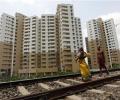
Slump in realty market to add to woes, debt of top players likely to rise 15-20% this financial year

Ajit Mishra, vice president, Research, Religare Broking, answers your queries.
While growth metrics for Infosys was skewed to a single vertical and it is struggling to get a handle on costs, TCS has been able to manage growth and keep cost inflation under control.

Increased price control over branded generic medicines has affected its profitability

Wiping off nearly Rs 4 lakh crore of investors' wealth during the day, benchmark Sensex crashed on Friday.

The combined market capitalisation of the 21 listed PSU banks declined by about Rs 76,000 crore to Rs 425,800 crore during the month.
D-Street is hoping RBI policy review meeting on Tuesday will uphold its stand on easing of interest rates

Cipla, though late in changing its strategy for international markets, has in recent years taken an inorganic route for expansion.

Banks stocks continued to trade weak along with FMCG major ITC.

Markets ended weak tracking the expiry of April derivative contracts.

Volatility might continue as the Chinese market is expected to open sharply lower, following a long break

Some banks might charge you a nominal amount of Rs 100-150 for issuing the card.

In Q3, E&P business accounted for just 1.5% of gross revenue

New law could pose challenges of cost escalation, increased paperwork, fear developers.

Experts say investors should be careful, as even a 50-100 bps cut in rates will not help such companies if their business is not doing well. Check what is the problem and consider
